
Dental pain access desk
Online dental pain medication access should begin with an evaluation of the tooth problem, not a request for a particular drug. If a clinician decides that medication is appropriate, the next steps are a valid prescription when required, a licensed pharmacy, an accurate medication history, and a plan for dental follow-up.
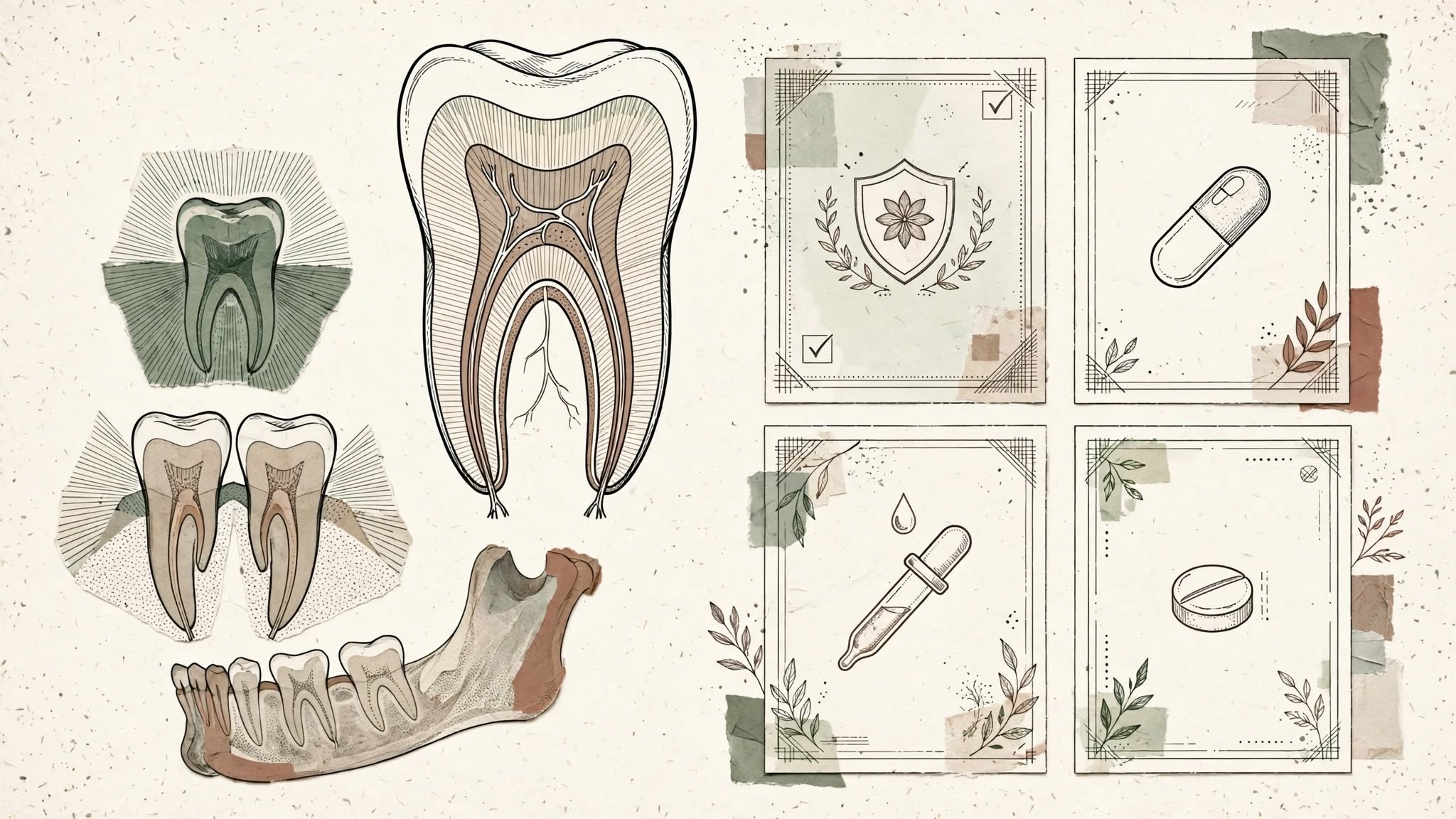
The short answer
This page explains access after clinical assessment. It helps patients prepare for evaluation, understand why five pain medicines follow different access pathways, check a dispensing pharmacy, and separate price questions from treatment decisions. It does not promise a prescription or decide which medicine is suitable.

Medically reviewed by
Internal medicine, health services research, and medication safety
Medical review completed
A three-part pathway
From evaluation to a fillable prescription
Dental pain can arise from decay, inflamed pulp, a cracked tooth, gum disease, trauma, an abscess, or pain referred from another area. A pain reliever may reduce a symptom without correcting its source. That is why an online encounter should first determine whether remote care is appropriate, whether an in-person examination or imaging is needed, and whether warning signs change the urgency.
Establish the problem
Describe the location, onset, triggers, swelling, fever, drainage, recent dental work, trauma, and changes over time. The online dental pain evaluation process explains what a clinician needs before deciding whether medication or urgent in-person care is appropriate.
Check medical fit
Share allergies, pregnancy status, kidney or liver disease, ulcers or bleeding, heart and blood-pressure history, asthma reactions, planned procedures, and every current prescription, nonprescription product, supplement, or recent injection.
Complete access safely
If a prescription is issued, confirm that the pharmacy is licensed where it serves patients, accepts the prescription, provides pharmacist access, and can explain pickup, delivery, insurance, and out-of-pocket choices without changing the clinical plan.
Keep the drug decisions distinct
Five medicine pathways, five separate questions
The American Dental Association identifies nonsteroidal anti-inflammatory medicines such as ibuprofen or naproxen, alone or with acetaminophen, as first-line options for short-term acute dental pain in many adolescents and adults when used as directed. That class-level statement does not make every medicine below interchangeable. Product form, prescription status, labeled limits, other medicines, pregnancy, kidney function, cardiovascular history, bleeding risk, and the dental diagnosis can all change the decision.
| Medicine | Access distinction | Medicine-specific destination |
|---|---|---|
| Naproxen | Some products are available without a prescription, while prescription products also exist. Retail availability does not establish suitability for a particular tooth problem. | Use the page on naproxen access for dental pain for the product-specific retail, prescription, and safety boundaries. |
| Ibuprofen | An 800 mg tablet describes a prescription strength, not a personal dose. Total NSAID exposure can rise unintentionally when medicines are combined. | See how prescription-strength ibuprofen access depends on assessment and a complete medication list. |
| Ketorolac | Ketorolac, also associated with the former Toradol brand name, has unusually narrow labeled boundaries and is not a routine substitute for another pain reliever. | The short-term ketorolac access pathway keeps those restrictions with the medicine-specific decision. |
| Diclofenac | Topical products labeled for arthritis and oral prescription products are different forms. A topical retail product is not a treatment for application to a tooth or inside the mouth. | Compare diclofenac forms and prescription access without merging topical and oral intent. |
| Celecoxib | Celecoxib, known by the Celebrex brand name, is a prescription COX-2 selective NSAID. Selectivity does not make it universally safer or automatically preferred for dental pain. | Read about celecoxib access and patient suitability for its distinct clinical and pharmacy checks. |
Prepare once, answer clearly
What to have ready before access begins
A complete file reduces avoidable back-and-forth and gives the clinician and pharmacist the same picture. It should be accurate even if a medicine has been used before without a problem.
- Where the pain is, when it began, what makes it better or worse, and whether it wakes you.
- Swelling, fever, drainage, bad taste, difficulty opening the mouth, or trouble swallowing.
- Recent dental procedures, injury, broken restorations, and available photographs or imaging.
- All medicines and supplements, including aspirin, anticoagulants, other NSAIDs, cold remedies, corticosteroids, and recent injections.
- Allergies and prior reactions, pregnancy status, relevant medical conditions, preferred pharmacy, insurance details, and location at the time of care.
Three practical handoffs
Evaluation, pharmacy, and cost answer different questions
Clinical fit
The evaluation determines whether remote care is suitable, whether dental treatment should come first, and whether a medication can be considered safely. It does not function as an order form.
Pharmacy legitimacy
Before sharing health or payment information, use the licensed pharmacy checks for dental pain medicine to verify prescription requirements, state licensure, contact details, and access to a pharmacist.
Price and coverage
Insurance status, generic availability, quantity, pharmacy network, and discount rules can affect the amount due. The page on dental pain prescription costs shows which questions belong with the prescriber, insurer, and pharmacy.
Common access questions
Frequently asked questions
Does an online dental visit guarantee a prescription?
No. The clinician may decide that a prescription is inappropriate, that a nonprescription option is sufficient, or that an in-person examination, imaging, procedure, or urgent care is needed. The decision depends on the diagnosis, medical history, current medicines, and the limits of remote assessment.
Can I ask for a particular pain medicine?
You can explain what you have used, what helped, and any side effects, but a requested name does not establish clinical fit. The clinician must consider the source of pain, product label, allergies, interactions, pregnancy, kidney and heart history, bleeding risk, and other patient-specific factors.
Is a medicine safer because it is sold without a prescription?
No. Nonprescription status does not remove cardiovascular, gastrointestinal, kidney, allergy, pregnancy, or interaction concerns. Follow the product label and ask a clinician or pharmacist when health history, other medicines, or persistent dental symptoms make the choice uncertain.
How can I tell whether an online pharmacy is legitimate?
FDA consumer guidance advises checking for state licensure, a U.S. address and telephone number, a requirement for a prescription when the medicine requires one, and access to a licensed pharmacist. Avoid sellers that bypass prescribing requirements or conceal who dispenses the medicine.
What if the pharmacy cannot fill the prescription?
Ask the pharmacist to explain the issue and contact the prescriber when a clinical change or substitution requires authorization. Do not replace the prescribed medicine with another NSAID or use someone else’s medicine. A different pharmacy may still need to satisfy state, prescription, stock, insurance, and identity requirements.
What follow-up is needed if the pain improves?
Improvement does not prove that decay, a fracture, inflamed pulp, gum disease, or infection has resolved. Follow the dental treatment plan and seek reassessment when symptoms persist, recur, or change. Medication access is a bridge to appropriate care, not a substitute for it.
Official clinical and pharmacy sources
- American Dental Association: Acute Dental Pain Management Guideline — evidence-based recommendations for short-term acute dental pain in adolescents and adults.
- U.S. Food and Drug Administration: Locate a State-Licensed Online Pharmacy — consumer checks for prescription requirements, licensure, contact details, and pharmacist access.
- MedlinePlus: Tooth abscess — symptoms, complications, and reasons dental treatment may be needed.
- DailyMed: Naproxen sodium 220 mg OTC Drug Facts — retail status and label-specific warnings.
- DailyMed: Ibuprofen prescription tablets — prescription strengths, boxed warnings, and patient-specific precautions.
- DailyMed: Ketorolac tromethamine tablets — medicine-specific indication, duration, contraindication, and boxed-warning boundaries.
- DailyMed: Diclofenac sodium topical 1% gel and diclofenac sodium delayed-release tablets — distinct topical and oral product labels.
- DailyMed: Celecoxib capsules — prescription status, boxed warnings, contraindications, and precautions.
This page provides general dental and medication-access information. It does not diagnose dental pain, recommend a medicine or dose, guarantee a prescription, or replace care from a dentist, physician, pharmacist, or emergency service.