
Prescription-strength ibuprofen access starts with the dental diagnosis and a medical-safety check. If a clinician decides that an ibuprofen 800 mg prescription is appropriate, the pathway then moves through a valid prescription, a licensed pharmacy, cost records, and follow-up for the source of pain.

The access boundary
This page organizes evaluation, pharmacy, and cost questions without taking purchase intent from the existing medicine page. An 800 mg tablet is a prescription strength described in the official label. It does not determine a personal dose, prove that ibuprofen is suitable, or replace treatment of the tooth problem.

Medically reviewed by
Internal medicine, health services research, and medication safety
Medical review completed
One decision, three handoffs
Why access begins before the pharmacy counter
Identify the dental cause
Location, duration, swelling, fever, drainage, trauma, recent treatment, and changes over time help determine whether remote assessment is suitable or an in-person examination and imaging are needed.
Reconcile every medicine
Ibuprofen is an NSAID. The DailyMed prescription label describes cardiovascular, gastrointestinal, kidney, allergy, pregnancy, and interaction concerns. A clinician needs the complete medicine and supplement list before deciding whether it can be considered.
Preserve the treatment plan
Pain improvement does not show that decay, inflamed pulp, fracture, gum disease, or infection has resolved. Medication access remains tied to definitive dental follow-up.
Three access decisions
Move from the dental decision to a documented fill
Clinical evaluation
Prepare symptoms, health history, allergies, and current medicines before the online dental evaluation for ibuprofen 800 mg.
Pharmacy fulfillment
Confirm prescription requirements, state licensure, and pharmacist access with the licensed pharmacy checks for ibuprofen 800 mg.
Cost and coverage
Separate clinical, pharmacy, and plan charges using the ibuprofen 800 mg prescription cost factors.
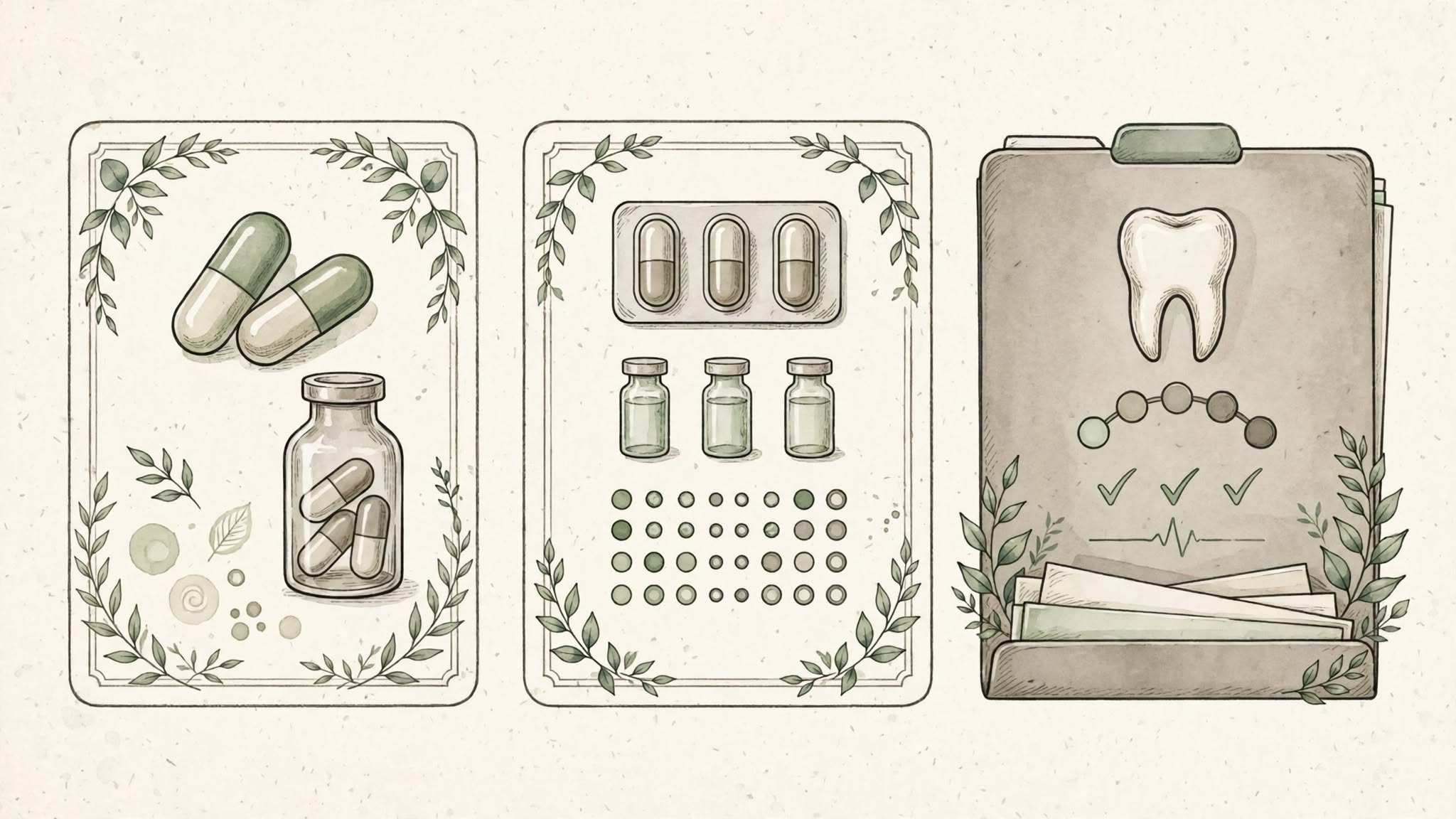
Information that belongs in the clinical record
- Pain location, onset, triggers, severity changes, and sleep disruption.
- Swelling, fever, drainage, bad taste, jaw limitation, or trouble swallowing.
- Recent dental work, injury, broken restorations, photographs, or imaging.
- All prescriptions, nonprescription pain products, aspirin, supplements, and recent injections.
- Allergies, prior reactions, pregnancy status, kidney disease, ulcers or bleeding, heart history, and asthma reactions.
Questions at the handoffs
Access questions that need different answers
What if a prescription is not issued?
The clinician may recommend nonprescription care, an in-person dental examination, imaging, a procedure, or urgent evaluation. The decision should be documented with the next step, rather than treated as a failed purchase attempt.
Can an old prescription settle a new episode?
A prior prescription does not establish that a new pain episode has the same cause or that the same medicine remains appropriate. New swelling, fever, trauma, treatment, illness, or medicine changes can alter the assessment.
Does pharmacy choice change the clinical plan?
No. A pharmacy can explain stock, network status, pickup, delivery, and the label, but it should contact the prescriber when a substitution or clarification requires authorization. It does not independently select the medicine or dose.
What should be kept after the fill?
Retain the prescription record, pharmacy name, label, receipt or claim notice, counseling information, and the dental follow-up plan. These records help reconcile instructions if the pharmacy, insurer, dental office, or patient portal displays different details.
Resolve a rejected claim without changing treatment
A pharmacy rejection can reflect network status, coverage rules, an inactive benefit, quantity limits, required authorization, or incomplete patient information. Ask for the exact rejection message and identify whether the insurer, pharmacy, or prescriber must respond. A cash quote may answer the price question, but it does not change clinical instructions or make an unverified seller acceptable.
Primary clinical and access sources
- American Dental Association: acute dental pain management — official evidence on short-term dental pain care.
- DailyMed: ibuprofen prescription tablets — prescription strengths, boxed warnings, contraindications, interactions, and patient information.
- U.S. Food and Drug Administration: locate a state-licensed online pharmacy — licensure, prescription, contact, and pharmacist checks.
This page provides general dental and medication-access information. It does not diagnose dental pain, select a medicine or dose, guarantee a prescription, or replace care from a dentist, physician, pharmacist, or emergency service.