
Aftercare decision guide
Some tenderness after dental treatment can reflect healing or temporary inflammation. Pain that is escalating, accompanied by swelling or fever, or different from the instructions given for the procedure deserves reassessment.
Medication is only one part of the picture. The parent dental pain medication overview explains how diagnosis, health history, and other medicines shape short-term pain decisions.
Start with the procedure-specific instructions
Expected symptoms differ after a filling, crown, root canal, extraction, implant procedure, periodontal treatment, or bite adjustment. The treating dental team knows what was done and what the examination showed. Their written instructions take priority over a generic timeline online.
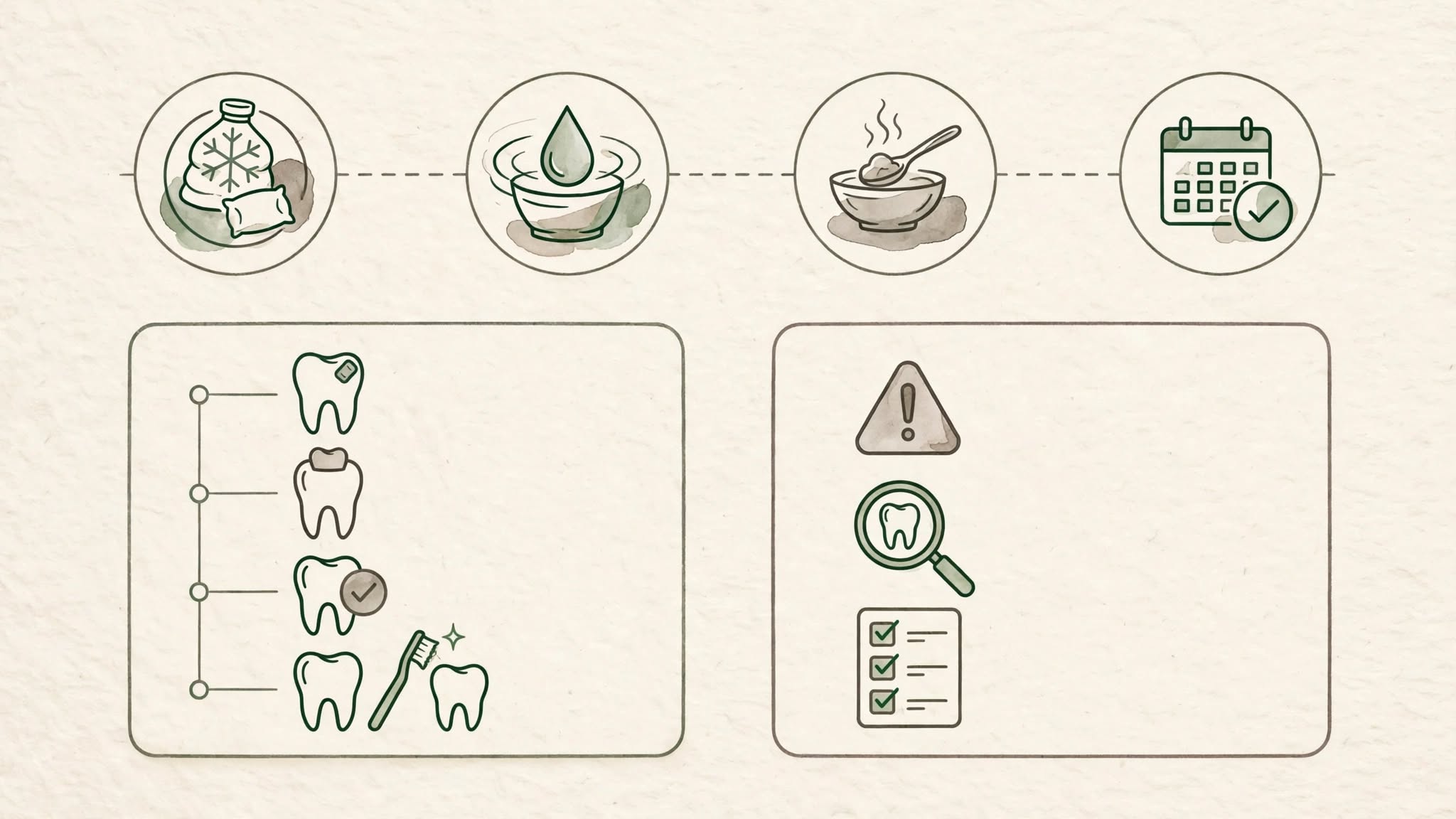
Reassuring direction
Symptoms are stable or gradually easing and match the care instructions, without new swelling, fever, or functional difficulty.
Call for reassessment
Pain is intensifying, returns after improvement, feels high when biting, or comes with drainage, bad taste, swelling, fever, or difficulty opening the mouth.
Why more pain medicine may be the wrong response
A high bite, dry socket, infection, retained irritation, fracture, or another procedural issue is not corrected by increasing or combining pain relievers. Reassessment can identify whether the treatment site needs attention. The comparison of ibuprofen and naproxen also explains why switching between NSAIDs is not a substitute for examining the cause.
What to report when you call
- Procedure and date, without guessing at technical details.
- Where the pain is and whether it is changing.
- Swelling, fever, drainage, bad taste, or bite changes.
- Every medication already taken, including nonprescription products.
- Allergy history and any new reaction.
Avoid placing aspirin directly on gum tissue, using another person’s prescription, or mixing NSAIDs. Do not continue a product after a serious adverse reaction simply because the dental pain remains.
Pain direction matters more than a borrowed timeline
Online recovery estimates often ignore the exact procedure, the condition of the tooth before treatment, and the instructions given by the treating clinician. A fixed number of days can therefore provide false reassurance or unnecessary alarm. Track whether symptoms are easing, stable, or worsening, and compare that direction with the plan you were given.
If the pain changes character, wakes you after it had improved, or is joined by swelling, fever, drainage, a bad taste, or bite difficulty, contact the dental team. Give the sequence clearly rather than trying to diagnose the complication yourself.
Protect the treatment site
Follow instructions for cleaning, eating, activity, appliances, and dressings. Do not apply aspirin, alcohol, peroxide, or unapproved topical products to the area. These steps can irritate tissue and make the clinical picture harder to interpret. If instructions are unclear or were lost, ask the treating office for the procedure-specific version.
General information only. Follow the instructions from the clinician who performed the procedure and contact that office when recovery differs from the plan.
Official sources
- ADA Acute Dental Pain Management Guideline.
- MedlinePlus tooth abscess warning signs, reviewed February 2026.
- FDA NSAID safety information.

Medically reviewed by
Jodi Segal, MD, MPH
Internal medicine, health services research, and medication safety
Medical review completed: August 27, 2026