
Dental infection care
Dental antibiotics for tooth infections are used selectively. Most tooth pain and localized swelling need treatment of the tooth itself rather than an antibiotic alone. A dentist first identifies the source, checks for spreading or systemic infection, and decides whether a procedure, medication, or both are appropriate.
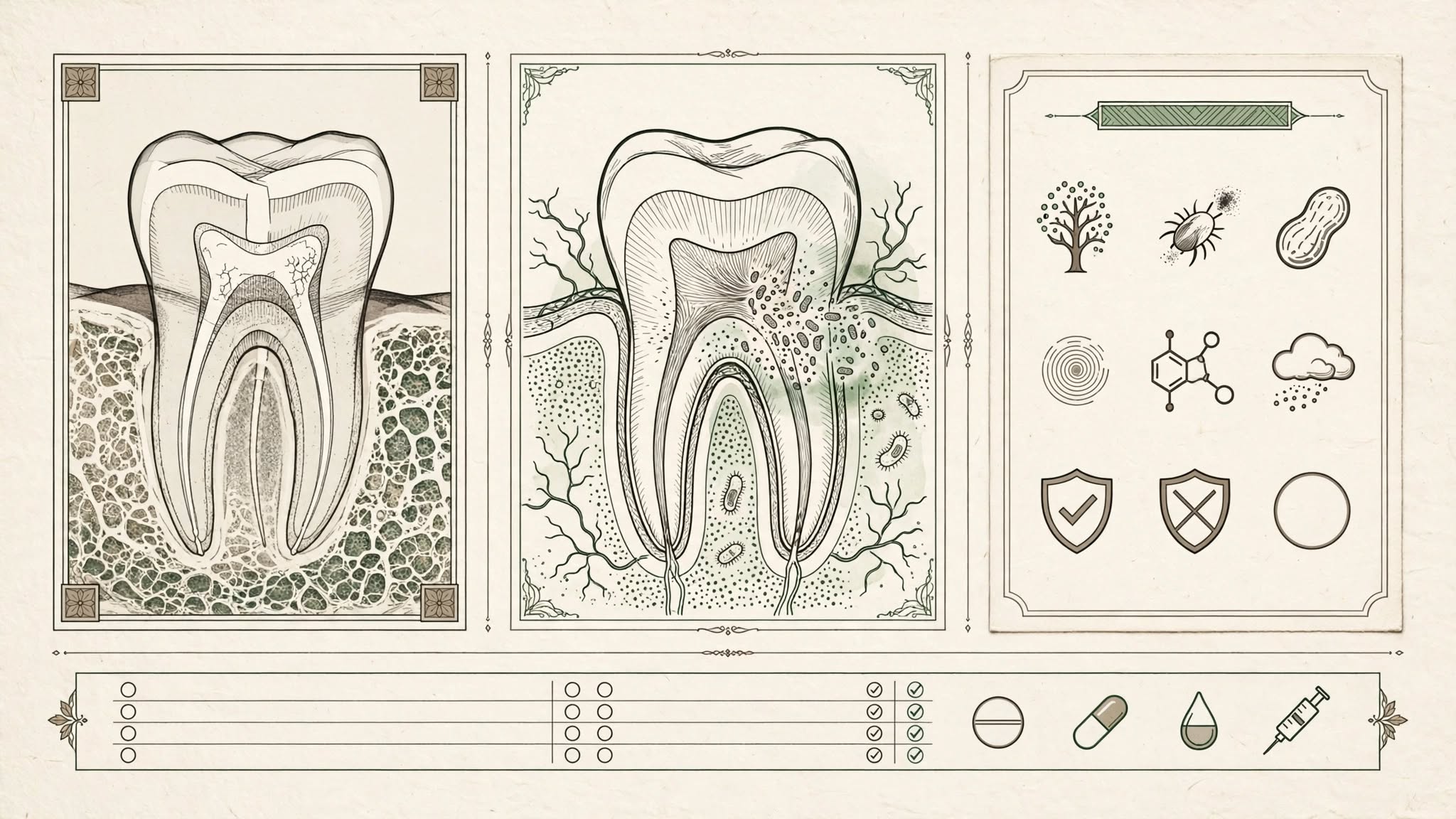
The decision begins with the tooth, not the drug name
Pain can come from inflamed pulp, a cracked tooth, a localized abscess, gum disease, or another problem with a different treatment. The American Dental Association recommends dental treatment instead of antibiotics for most pulpal and periapical pain and swelling. Antibiotics become more relevant when the clinical picture shows systemic involvement, such as fever or malaise, or when a dentist identifies another evidence-based indication.
A prescription request cannot show whether pressure needs to be relieved, infected tissue needs to be removed, or a tooth can be restored. Those decisions depend on an examination and, when indicated, diagnostic imaging. Antibiotics may help control susceptible bacteria, but they do not repair decay, seal a fracture, complete root canal treatment, or drain an abscess.
What the evaluation needs to establish
Where the infection started
The diagnosis separates a dental condition that needs a procedure from pain that will not benefit from an antibacterial drug.
Whether it is spreading
Fever, malaise, enlarging swelling, and concern for a deeper infection change urgency and may change the treatment plan.
What the medical history changes
Drug allergies, kidney or liver conditions, pregnancy, immune status, current medicines, and prior C. difficile infection can affect selection.
Which dental treatment is still needed
The plan may require drainage, endodontic care, extraction, or another procedure even when an antibiotic is prescribed.
Three antibiotics, three different safety questions
The options below are not a ranking and they are not interchangeable. They lead to separate access pages because each medication has a different label, allergy profile, interaction review, and place in dental guidance.
- Amoxicillin
- ADA guidance identifies amoxicillin as an option when an antibiotic is indicated for certain urgent pulpal and periapical conditions. It remains a prescription drug, and a history of serious reactions to penicillins or other beta-lactam antibiotics can rule it out. Read the online amoxicillin evaluation process for the access and safety questions attached to this medication.
- Cephalexin, also searched as Keflex
- Cephalexin is a cephalosporin. Current dental guidance treats allergy history as a meaningful branch in the decision rather than labeling cephalexin a universal substitute. Kidney function and medicines such as metformin or probenecid may also matter. The cephalexin access page after dental assessment keeps that transactional question separate from general infection education.
- Clindamycin and the Cleocin search name
- Clindamycin carries a boxed warning for C. difficile-associated diarrhea and colitis. CDC dental stewardship material advises avoiding it when alternative options can be used. That makes prior gastrointestinal history and the reason for selecting it central to the clindamycin evaluation pathway.
Interaction review differs by drug as well. The current amoxicillin label flags probenecid, oral anticoagulants, allopurinol, and oral contraceptive counseling. The cephalexin label identifies metformin and probenecid, with additional caution when kidney function is impaired. Clindamycin can enhance neuromuscular-blocking medicines, and strong CYP3A4 or CYP3A5 inhibitors or inducers may change its exposure. These checks require a complete medication list, not a standard online questionnaire copied from another person.
Why antibiotics may not stop tooth pain
A tooth can remain painful when the bacterial source is sealed inside, pressure continues to build, or damaged tissue is still present. An antibiotic may reduce part of the infectious burden without removing that source. This is why the same ADA guidance prioritizes procedures such as pulpotomy, pulpectomy, nonsurgical root canal treatment, or incision and drainage for the covered conditions when that care is available.
Temporary improvement does not prove the tooth has healed. A fading ache can coexist with an active problem, and symptoms may return after medication ends. A treatment plan needs to address both the infection risk and the tooth that created it.
Common mistakes that weaken treatment
- Using leftover capsules from an earlier illness.
- Sharing a prescription with another person.
- Choosing a drug by price or brand familiarity.
- Delaying the dental procedure because swelling briefly improved.
Valid prescriptions and pharmacy checks
Amoxicillin, cephalexin, and oral clindamycin are prescription medicines in the United States. A valid prescription follows a clinician’s decision that the selected drug is appropriate for the diagnosed condition and the individual safety profile. This site does not sell, ship, or dispense any antibiotic.
If a prescription is issued, FDA advises using a state-licensed pharmacy that requires a prescription, provides a physical U.S. address and telephone number, and makes a licensed pharmacist available. A website offering prescription antibiotics without those safeguards should not be treated as a shortcut.
Start with the dental question
The Smile and Implant Center contact page can be used to ask about scheduling a dental appointment. Contact does not guarantee a diagnosis, antibiotic, or prescription.
This page provides general dental information. It cannot diagnose an infection, select an antibiotic, or replace care from a dentist or other qualified clinician.
Clinical sources reviewed
- American Dental Association: antibiotics for dental pain and swelling guideline, based on the 2019 evidence review.
- CDC checklist for antibiotic prescribing in dentistry, accessed August 26, 2026.
- MedlinePlus clinical overview of a tooth abscess, page reviewed February 5, 2026.
- DailyMed amoxicillin capsule label, page updated December 22, 2025.
- DailyMed cephalexin capsule label, revised March 2026.
- DailyMed clindamycin hydrochloride capsule label, current version published July 20, 2026.
- FDA BeSafeRx state-licensed pharmacy checker, accessed August 26, 2026.
Explore the decision in more detail
Four focused guides for infection and antibiotic questions
Drug choice is only one part of infection care. Read how cephalexin may be considered for a tooth infection, why antibiotics may not replace treatment of the tooth, which details matter in a dental antibiotic allergy history, and when an antibiotic is not the right dental treatment.

Medically reviewed by
Infectious diseases and antimicrobial stewardship
Reviewed
Also in the verified contributor directory: Sara Cosgrove, MD · Medical Contributors. These profile links do not identify additional reviewers of this page.