
Source control matters
Antibiotics can help in selected dental infections, especially when there are systemic signs or spreading infection. They do not remove the diseased tissue, pressure, decay, or structural damage that started the problem.
The complete decision sits in our dental antibiotic overview. This page focuses on the reason a prescription and a dental procedure answer different parts of the same problem.
Medication and dental treatment do different jobs
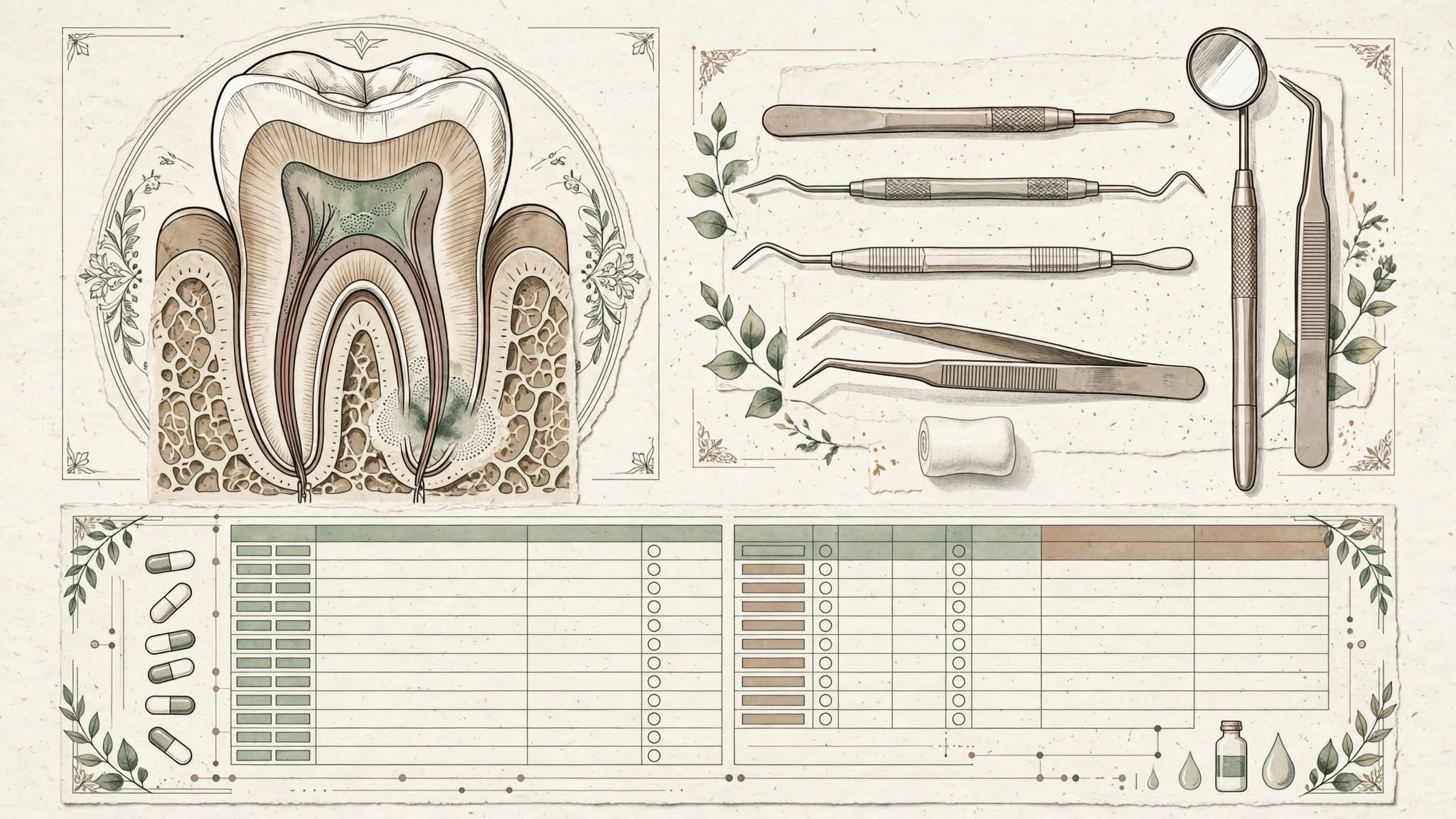
When bacteria are trapped within a tooth or a collection of pus forms, an antibiotic may reach surrounding tissues but cannot mechanically clean a root canal, open an abscess, restore a cavity, or remove a tooth that cannot be saved. ADA guidance therefore prioritizes definitive dental treatment for many pulpal and periapical conditions when that care is available.
What medication may address
A susceptible bacterial infection in the clinical circumstances for which an antibiotic is indicated.
What the procedure addresses
The tooth, damaged tissue, drainage, decay, fracture, or another physical source producing pain and infection.
Why temporary improvement can mislead
Swelling or pain may ease after medication while the source remains. That improvement is useful, but it is not proof that the tooth has healed. Symptoms may recur, and repeated antibiotic courses can add risk without completing the needed care.
The opposite problem also occurs: severe tooth pain can arise from inflamed pulp without the clinical circumstances in which an antibiotic helps. A prompt examination is what separates these patterns. Our guide to situations where antibiotics are not the right treatment explains why pain intensity alone is not the deciding factor.
What a dentist may need to establish
- The tooth or tissue causing the symptoms.
- Whether swelling is localized or spreading.
- Whether drainage or another procedure is needed.
- Fever, malaise, immune status, and other urgency signals.
- Allergy history, kidney function, pregnancy, and current medicines.
This is not a universal checklist and does not promise a particular treatment. Imaging and examination needs vary with the presentation.
If cephalexin is being discussed, the sister article on cephalexin and tooth-infection decisions explains the allergy and interaction questions without turning the drug name into a recommendation.
Follow-up closes the loop
A treatment plan should make clear what happens after the immediate visit. That may include completing a dental procedure, monitoring swelling, returning for restoration, or contacting the practice if the expected direction changes. A patient should know whom to call and which symptoms should not wait. Medication is easier to use safely when it is attached to a defined next step rather than treated as the entire plan.
General information only; it cannot diagnose a tooth infection or replace treatment from a dentist.
Official sources

Medically reviewed by
Marisa Holubar, MD, MS, FIDSA
Infectious diseases and antimicrobial stewardship
Medical review completed: August 27, 2026