
Before a medicine decision
A useful online dental assessment gathers enough evidence to determine what can be handled remotely, what needs an examination or imaging, and whether celecoxib has any appropriate role in the care plan.
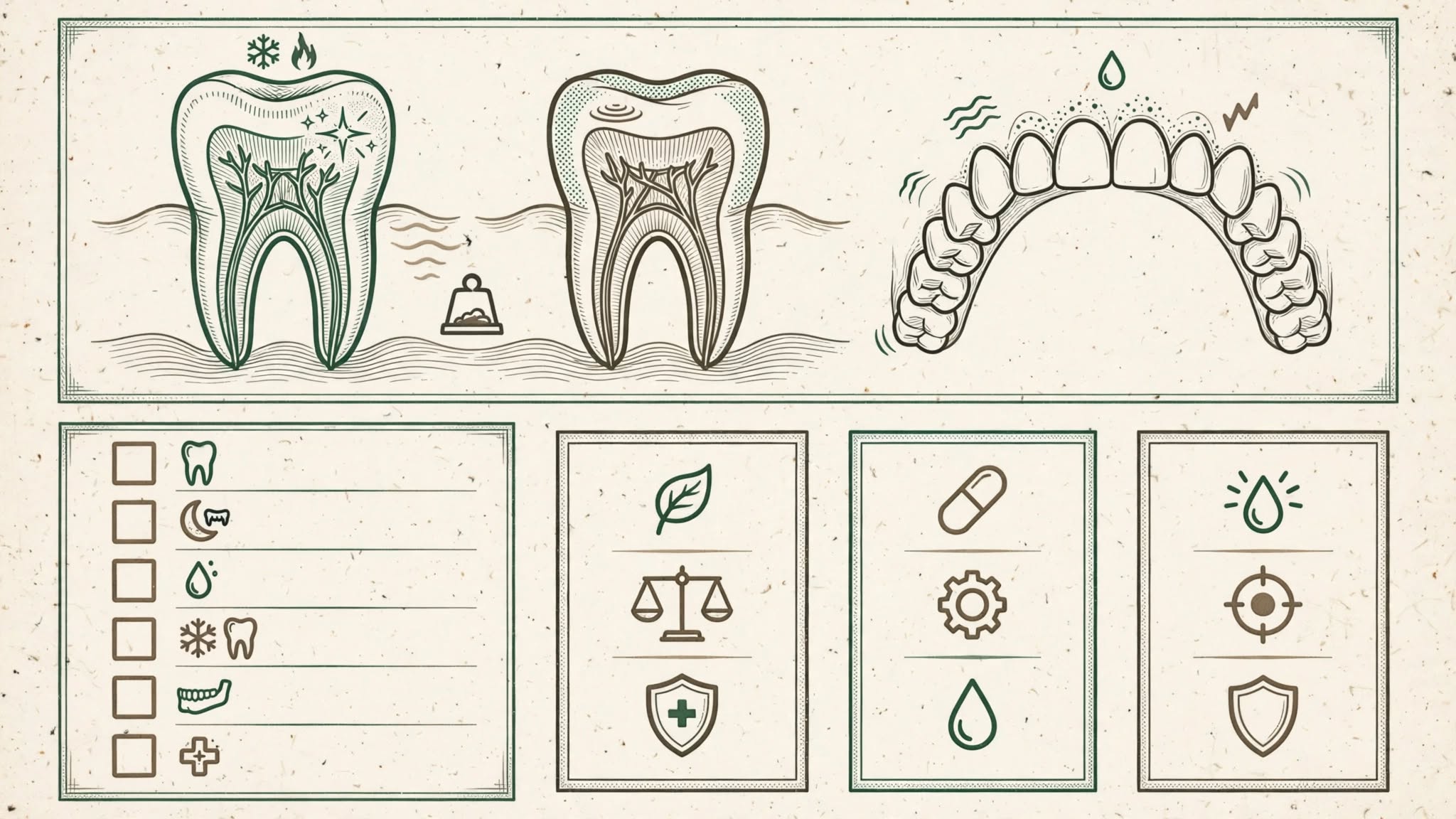
Short answer: an online evaluation does not begin with a medicine request. It begins with the source and urgency of the dental pain. The dentist then checks whether remote assessment is adequate and whether the patient’s cardiovascular, gastrointestinal, kidney, allergy, pregnancy, and medication history allows celecoxib to be considered safely.

Medically reviewed by
Internal medicine, health services research, and medication safety
Medical review completed
Prepare the assessment in four parts
Describe the dental problem
Record where the pain is located, when it began, whether it is constant or triggered, and whether biting, temperature, pressure, lying down, or recent treatment changes it. Note swelling, fever, drainage, bad taste, trauma, a broken tooth, and any home measures already tried.
Show what can be shown remotely
Follow the clinic’s instructions for well-lit images and prior records. A photograph may help with triage, but it cannot show everything beneath a filling, inside a tooth, around a root, or in bone. The dentist may still need a hands-on examination, percussion testing, or radiographs.
Provide the complete health context
Include heart and blood-pressure history, prior stroke, heart failure, ulcers or gastrointestinal bleeding, kidney or liver disease, fluid retention, asthma, allergies, prior reactions after aspirin or another NSAID, pregnancy status, and upcoming procedures. These details may change whether celecoxib is considered at all.
Reconcile every medicine
List prescriptions, OTC pain medicines, aspirin, topical products, supplements, and recent injections. The current celecoxib label identifies clinically important issues with other NSAIDs, anticoagulants or antiplatelet drugs, corticosteroids, some antidepressants, ACE inhibitors or ARBs, diuretics, lithium, methotrexate, and other medicines.
What the dentist is trying to distinguish
Pain that may need a procedure
Decay, inflamed pulp, a cracked tooth, periodontal disease, trauma, or an abscess may require restoration, root-canal treatment, drainage, extraction, or another procedure. Symptom relief alone does not correct the source.
Pain that needs urgent escalation
Rapidly spreading facial or neck swelling, trouble breathing or swallowing, eye-area swelling, confusion, severe weakness, or serious systemic illness requires urgent in-person help rather than waiting for an online medicine decision.
A possible role for an NSAID
The ADA acute dental pain guideline supports NSAIDs in appropriate patients, often as part of a clinician-directed plan. That does not establish that celecoxib is the best choice for a particular patient or dental diagnosis.
A reason to choose another plan
Medical history, interactions, pregnancy, allergy history, surgery timing, the need for imaging, or the nature of the dental problem may lead to in-person care, a different medicine, or no prescription.
Do not wait on an online response when warning signs are present
Breathing or swallowing difficulty, rapidly spreading swelling, swelling near the eye, severe systemic symptoms, or signs of sepsis need urgent assessment. New chest pain, shortness of breath, one-sided weakness, black stools, vomiting blood, or facial or throat swelling after medicine also require prompt medical care.
What a responsible result can look like
The outcome may be reassurance with follow-up, an in-person appointment, imaging, definitive dental treatment, a clinician-directed nonprescription plan, a prescription for a suitable medicine, or an urgent-care referral. A platform should not promise which result will occur before the assessment.
After the assessment
Connect the stages
After the clinical decision, the full celecoxib access pathway connects the assessment with pharmacy fulfillment and cost records.
Check fulfillment
If a prescription follows, verify pharmacy credentials and dispensing records before relying on pickup or delivery instructions.
Keep charges separate
The cost and coverage records to collect help keep clinical, pharmacy, and payment questions in separate lanes.
Questions patients often ask
Are photographs enough to diagnose dental pain?
Not always. Images can support triage, but some conditions require examination, vitality testing, percussion, periodontal assessment, or radiographs. The dentist decides what is necessary based on the symptoms and visible findings.
Should I stop another medicine before the appointment?
Do not stop a prescribed medicine solely to prepare for the visit. Provide the full list and ask the responsible clinician or pharmacist how to manage possible interactions.
Does COX-2 selectivity remove stomach or heart risk?
No. Celecoxib’s current prescribing information includes boxed warnings for serious cardiovascular and gastrointestinal events. Individual history and concurrent medicines still matter.
Primary sources
This page is educational and cannot diagnose a dental condition, guarantee remote suitability, promise a prescription, or replace care from the dentist and other clinicians responsible for the patient.